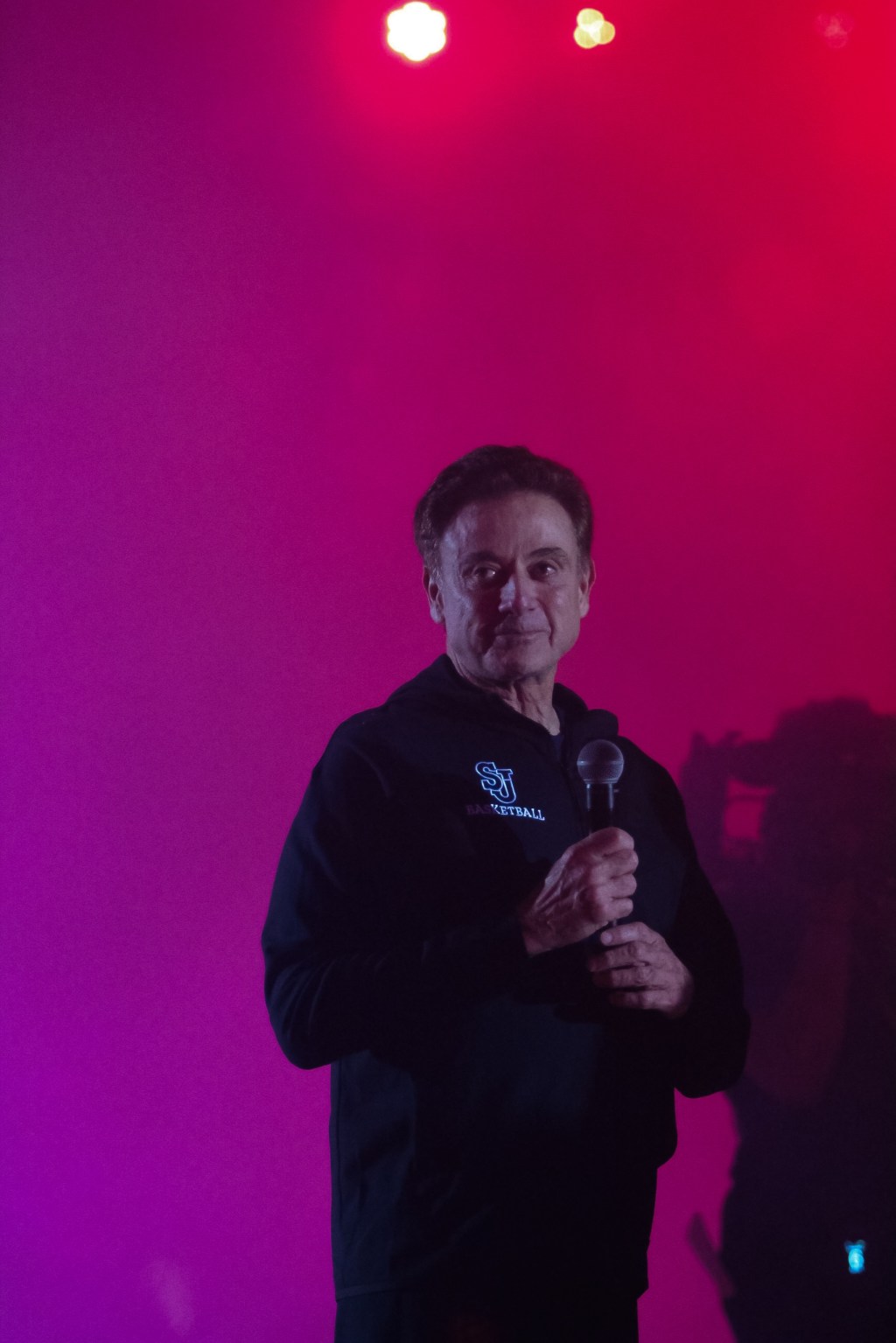
Photo courtesy of Dave’s Joint.
By David Cordova
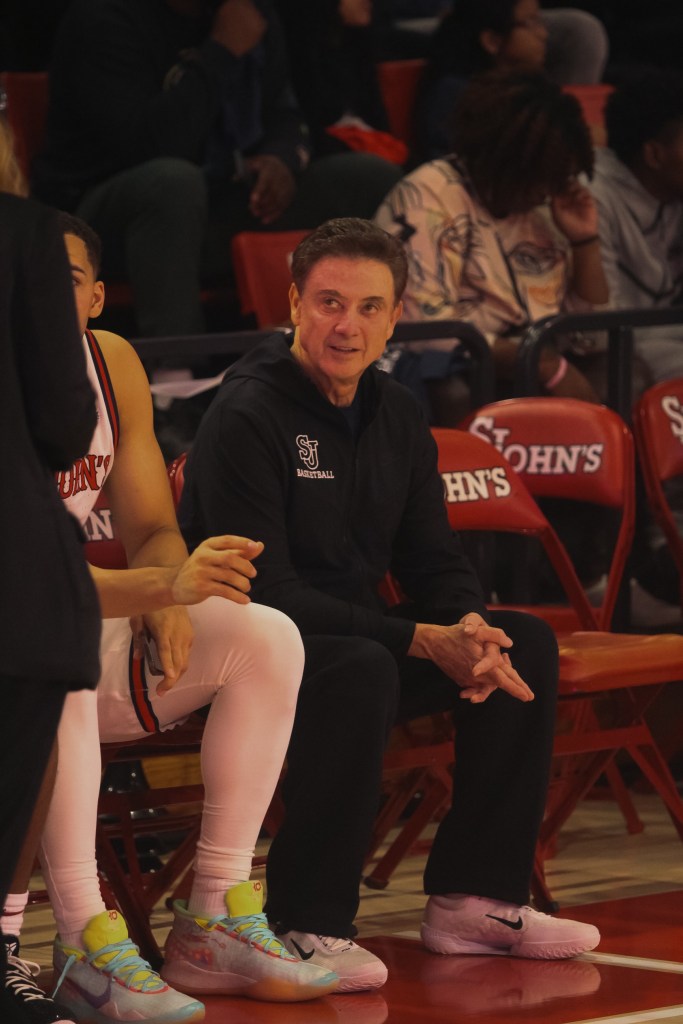
In this edition of our series, The City Game, we will be talking about the effect that hire of legendary basketball coach, Rick Pitino, has had on his new employer, St. John’s University, all of New York City and also, the Big East Conference.
On April 17th, a windy spring afternoon in New York City, a major announcement would be made that would put all of college basketball and many sports fans in a frenzy, as it is one that would bring change to one of the most historic programs ever in the college game.
On this date, St. John’s hired Rick Pitino to be the new head coach of the Red Storm’s men’s basketball program. After some time of speculation, it was something that the fanbase had been waiting for, as it is something monumental. However, to understand Coach Pitino, you have to go back to the basics, or rather, the very beginning.
Before he won two national championships, coached for two different teams in the NBA and became one of the biggest figures in all of basketball, Richard Andrew Pitino was a kid that was raised in the borough of Queens and then later moved out to Bayville, Long Island. He is Italian-American, with Sicilian roots, but he is definitely a true New Yorker.
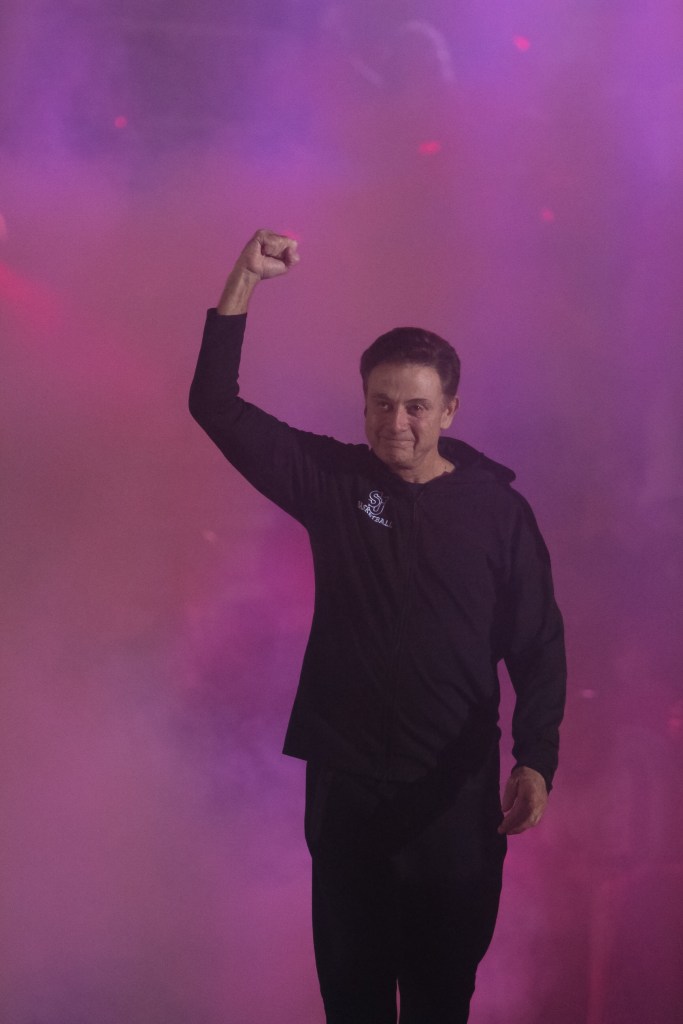
A 1970 graduate of St. Dominic’s High School in Oyster Bay, Long Island, he was one of the standouts in the CHSAA Nassau/Suffolk division, averaging 28.1 points per game as a senior, and earning the nickname, “The Rifle,” due to his scoring ability.
He then went on to play collegiate basketball at UMass, where he graduated in 1974. In his three years with the Minutemen’s varsity (back in those days, incoming freshmen had to play on the freshman team, irregardless of their level of talent), he wasn’t much of a scorer, but he was definitely a solid point guard, averaging 6.5 assists per game as a senior in 1973-74, and had 168 total assists, which is in eighth place for dimes in a single season. He finished his collegiate career with 329 assists, which was later surpassed by another New York City guard in Brooklyn’s own Chaz Williams.
After his playing days ended, it took him four years as an assistant at Hawaii and Syracuse before he became a head coach in 1978 at Boston University, where he would stay for five years, before moving on to coach in the NBA with the New York Knicks as an assistant under Naismith Hall of Famer, Hubie Brown, in 1983, and lasted two seasons, before going back to coach on the college level in 1985 at Providence College. In his second season as head coach of the Friars, in 1986-87, he led them to the NCAA Final Four, but then lost in the semifinals to another Big East foe in Syracuse, and finished at 25-9.
After that, he went back to the NBA, becoming the Knicks’ head coach for two seasons from 1987-89, leading the Knicks to two straight playoff appearances, and an Atlantic Division title in the 1988-89 season.
He then went on to be the head coach from 1989 through 1997, changing the culture after a scandal from the previous coaching staff led to the NCAA stripping them of the ability to compete in the NCAA Tournament for two seasons. During the 1991-92 season, he led the Wildcats to a 29-7 record and an appearance in the Elite Eight, where they lost to Duke, after a shot by All-American and future pro Christian Laettner. However, that was just the first in a few appearances that the Wildcats would make in March Madness during the 1990’s. In 1995-96, they went 34-2 on the season and would win the national championship, with a roster of heavily-touted talent. A total of nine players from that team would go on to play in the NBA. In 1996-97, Pitino would once again lead the Wildcats to the national championship game, where they would lose to Arizona.
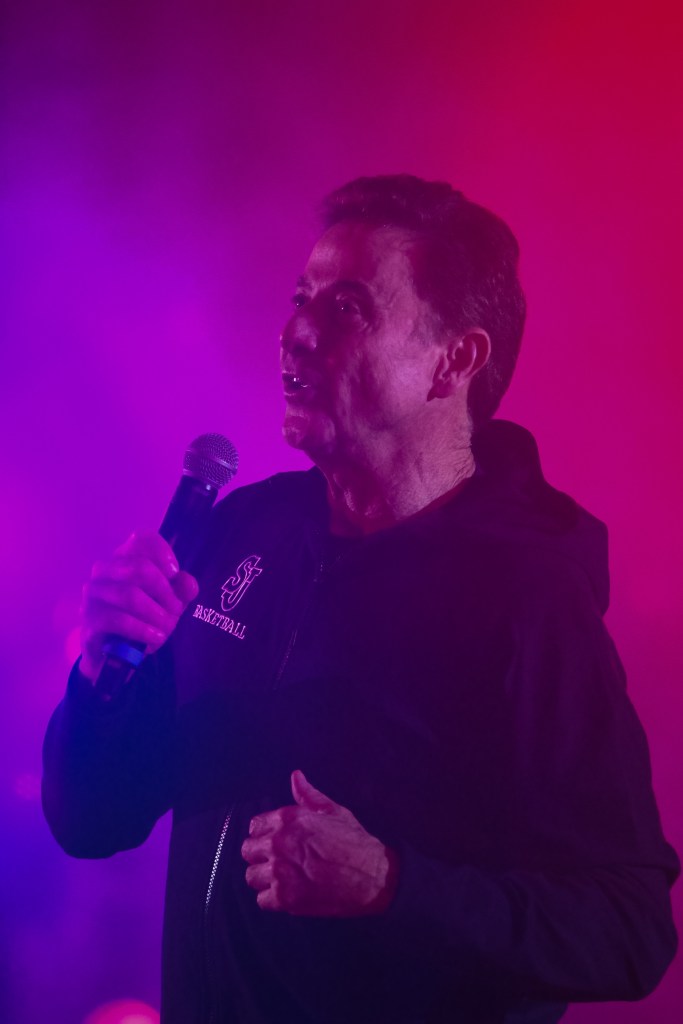
After that, he would go back to coaching in the NBA, only this time, it would be with the Boston Celtics. However, it would not be a successful situation, as he would have four losing seasons, resigning after 34 games in the 2000-01 season.
He would then go on to his longest-tenured position, coaching at the University of Louisville, where he would replace another Hall of Famer in the late Denny Crum, in 2001, and would stay with the program until the end of his tenure in 2017. In 2012-13, he would lead the Cardinals to the national championship. Even though the NCAA vacated it due to the scandal that Louisville was caught up in a few years ago, that memory can’t be erased. As the late Bernie Mac said in the 1994 film, “Above The Rim,” you can’t erase what they were.
After that, he would then go on to coach professionally on the international level in Greece with Panathinaikos for a period of two years and went in 18-19, with one playoff appearance.

Then in March 2020, Pitino came back to the college scene and was named as the successor to long time head coach Tim Cluess. What followed would be two MAAC titles and appearances to the NCAA Tournament, including last season, when the Gaels went to the first round. During his three seasons at Iona, he went 64-22, with a 40-9 record in MAAC play.
Now that the general public is all caught up on the man, it’s time to talk about the effects that he’s brought to the city.
Since the retirement of the legendary Red Storm head coach, Lou Carnesecca in 1992, there have been many head coaches that have come and gone in the last 31 years. The only coach that has come close to matching success as far as the NCAA Tournament, was Mike Jarvis, who led the Red Storm to the NCAA Final Four in 1999. Aside from him, they had plenty of coaches that were from the area or had big names. There were coaches such as Brian Mahoney, Fran Fraschilla, Norm Roberts, Steve Lavin, Chris Mullin and Mike Anderson, the coach who preceded Pitino. However, with the coaches that were named, the ones who made March Madness never made it past the first round and there were a couple who never made the Big Dance at all.
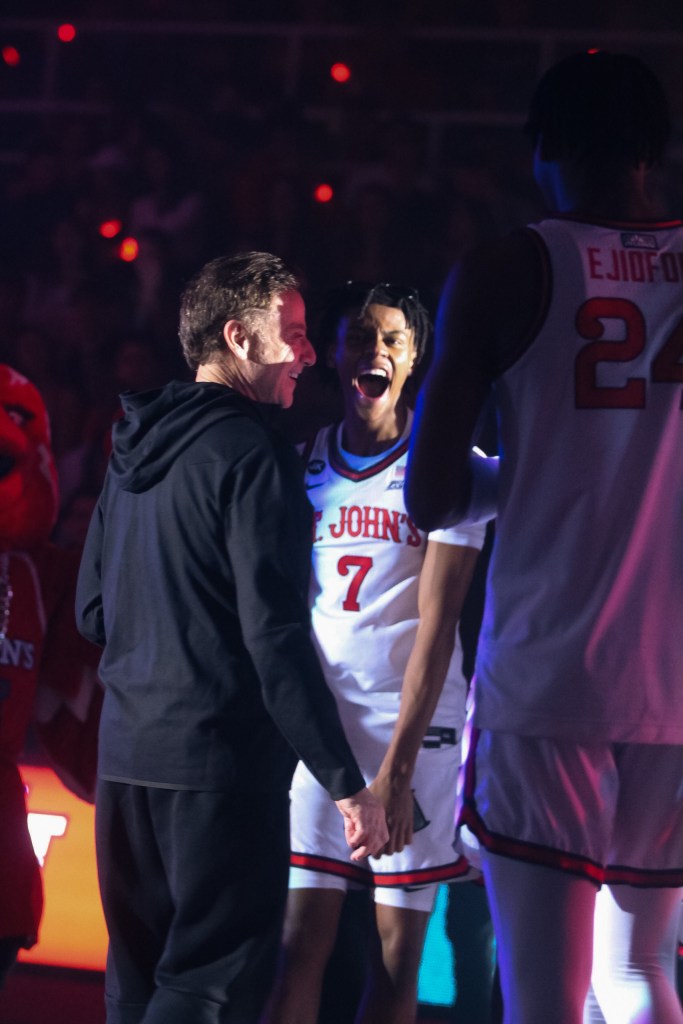
What Pitino brings to the table is his successful resume, which is definitely Hall-of-Fame caliber and the fact that he is a New Yorker.
And also, he has had plenty of success with players from the Big Apple that went on to make names for themselves.
At Providence in the mid-to-late 1980’s, he went on to coach Billy Donovan, a native of Rockville Centre, Long Island who was on the 1987 NCAA Final Four team. Although Donovan was drafted into the league in the third round of the 1987 Draft by the Utah Jazz, he later found success as a head coach, leading the University of Florida to two national championships in 2006 and 2007, and is now the head coach of the Chicago Bulls. A couple of other players on the ’87 Friars team in Staten Island’s Abdul Shamsid-Dean and Bronxville’s own Marty Conlon would also be drafted into the NBA.
When he was the head coach of the Knicks for the first two years, he had the pleasure of coaching two city legends in Queens’ own Mark Jackson, who was a part of the Red Storm’s 1985 Final Four team, and also The Bronx’s own Rod Strickland, both of whom were two of the city’s standouts when they were in high school.
At Kentucky, he was successful in recruiting Harlem’s own Jamal Mashburn, who played for the Wildcats for three seasons before he became the No. 4 overall pick in the 1993 NBA Draft by the Dallas Mavericks and had a long career in the NBA.
With the Celtics, he coached one of the most decorated New York City legends in Queens’ own Kenny Anderson, who played in Boston with Pitino for three seasons.
Then at Louisville, he had the pleasure of coaching New York City point guards such as Manhattan’s own Edgar Sosa and Brooklyn’s own Russ Smith, who was a member of the 2013 national championship team. He also coached one of today’s superstars in Cleveland Cavaliers guard Donovan Mitchell, who hails from Elmsford, which is in Westchester County.
As someone who has coached those types of players, you can only imagine that student-athletes will be enamored with wanting to play for a legend like Pitino. The message is clear and it’s simple: Pitino is the guy that will get you to where you want to be and will develop you.
And he has coaches that are also from the New York City area: Van Macon, a Queens native and a 1988 graduate of Newtown High School in Elmhurst. He also has Steve Masiello, a native of Westchester County, who also has a pre-existing relationship with Pitino, as he played for the latter as a freshman at Kentucky, and also coached under him at Louisville & Iona, respectively. And also, The Bronx’s own Garfield “Ricky” Johns, who played at Wings Academy in the 2000’s, and also coached under Pitino at Iona. The point is, with these three on the staff, it helps bring visibility to recruits, as they are able to sell St. John’s to the local recruits, of whom are high-major players of course.
Also, there’s something else that St. John’s could sell local recruits. the chance to play at the legendary Madison Square Garden for a total of eight games a year, which will be the case this season, as they will be playing against teams such as Michigan (Nov. 13th), Fordham (Dec. 16th) and also six times during Big East play, as they will be playing against foes such as Villanova, Georgetown, Providence, Creighton, the defending Big East champs, Marquette, and also, the reigning defending national champions, UConn.
When asked about the upcoming games at the Garden this season during Big East Media Day this week, he replied,“I’m looking forward to this year as much as I have in any time in my coaching history because its back home. I still remember my New York Knicks press conference. … The Garden has changed immensely, about two billion dollars added into it, but still the same freight elevator to get to the locker room. There have been a lot of changes but it’s the great history and I’m so excited to be back a part of it.”
And there’s one other thing: they will play three home games at the UBS Arena, which is on the Queens-Long Island border. The UBS Arena is convenient, as the NICE buses, as well, as the MTA buses and two Long Island railroad stations are able to get commuters from Long Island and New York City, to the games. And lastly, the UBS Arena, is a beautiful venue that is only about two years old and definitely deserves to be a part-time venue for the program, due to its close proximity to the school, which is located on Utopia Parkway in Jamaica, Queens. This season, the Red Storm will be playing there against Hofstra (Dec. 30th) and during Big East play against DePaul and Seton Hall.
And lastly, another thing that Pitino has done to bring St. John’s to greater heights is build a new roster. Gone are many of the Red Storm’s players from last year, due to transfers or graduation. However, only two holdovers remain in fifth-year senior forward Joel Soriano and junior forward Drissa Traore. This year’s team includes many new players such as two of his guards from Iona in sophomore Cruz Davis and senior Daniss Jenkins and sophomore forward Sadiku Ibine Ayo, who also played for Pitino with the Gaels last season, and other transfers such as senior guard Jordan Dingle (Penn), sophomore guard R.J. Luis (UMass), graduate student and forward Chris Ludlum (Harvard), junior forward Glenn Taylor, Jr. (Oregon State), graduate student and guard Nahiem Alleyne (UConn) and sophomore forward Zuby Ejiofor (Kansas). There were also two incoming freshmen straight out of high school added to the equation in Plainfield, New Jersey native Simeon Wilcher, who played high school ball for defending state champions and perennial powerhouse, Roselle Catholic, and also one of the first recruits that came in after Pitino was hired, in Brady Dunlap, a California native who played high school ball at Harvard-Westlake.
In regards to this year’s roster, he added, “We have [12] new faces and the toughest thing for us has been to get the guys to know each other’s skill set and getting them to communicate defensively. We are basically starting from scratch and that’s been tedious to say the least, but it’s been very enjoyable.”
When it came to putting the roster together, he replied, “I had three prerequisites that I wanted in this recruiting class. I wanted great athletes who were great people. Then I wanted to make sure they had high goals for themselves so they could take their goals and turn them into something special. If you want to prosper the name on the back, play for the name on the front. That’s how you build a culture. When you play every single day in practice for the name on the front, the back will prosper. That is what we keep preaching to this team.”
All in all, there’s a lot of excitement to look forward to at St. John’s this year with the presence of Pitino. You’ve got eight games in one of the most legendary venues in the world, NIL, a new roster and plenty of possibilities. It’s safe to say that the Pitino Effect is working.
On Friday night, Pitino and the team embraced a sold-out crowd at Carnessecca Arena for the annual Red Storm Tip-Off, which would be a glimpse of what is to be expected this upcoming season. And then on Saturday, the Red Storm played their unofficial first game of the new era in a charity exhibition game against an old Big East foe in Rutgers, in which the game was reminiscent of the old days. The game would go to double-overtime, in which St. John’s prevailed, 89-78.
When asked what should be expected from the Red Storm this season by the fanbase, he said this simply, “Very similar to our exhibition game. We played Rutgers to a double-overtime game. Both teams just played with a lot of heart and made a lot of mistakes early on, but both teams played their tails off. I think that’s what our fans should expect from us. We are going to give every ounce of perspiration we have in us to try and get a victory.”
When asked about winning at St. John’s, he added: “St. John’s is special and for me building St. John’s up to a national power would just be an incredible experience for everyone that I call a friend or family member.”
And lastly, about what a successful season would mean for the Red Storm this season?
“With any team, you must make the NCAA Tournament to be successful. I think that’s the gauge. I’ve been to seven Final Four’s, and I’ve also lost early in the tournament.” Pitino said, “Once you get in and get by the First Round, there are no one or two seeds anymore. You are all equal once you get to the Round of 32. Getting in the tournament is crucial. It’s what gives you hope and dreams. Look what St. Peter’s did. You know all the stories. Look at Loyola-Chicago. I know it with Providence in 1987. I also know it in 1996 with [Kentucky], one of the greatest teams ever assembled. Success means getting into the tournament and that is going to be difficult in this conference because it’s a grind. I know this and I haven’t even coached one game [at St. John’s], but I know it just looking at that scoreboard and seeing all the players on it, it’s going to be a grind.”
All we can say is, “Let the games begin.”
Look out for our next entry, as we will be talking about the game at Nike Pro City this summer in which Los Angeles Clippers guard Nahshon “Bones” Hyland, scored 44 points for the New Jersey-based Hoopsville.
 Dave's JOINT
Leave a comment